This edition of FIFA World Cup will be bigger and better than ever before. New structural changes means:
- 48 teams will compete in 12 groups instead of 32 in 8 groups
- A new Round of 32 knockout stage means there will be way more action than before — we’re looking at a total of 104 fixtures instead of the previous 64
Savvy bettors know that the new FIFA World Cup 2026 format will blow open the door for new betting opportunities, especially with the Round of 32—a great chance for bettors who like to spot potential upsets. Ozoon Sportsbook will lead the pack with a myriad of betting markets every step of the way. If you’ve been wondering about the World Cup 2026—how it works and what the changes mean — you’re in the right place.
How Many Teams are in the 2026 World Cup?
Up from 32 teams, FIFA World Cup will see a 48-team World Cup format in the 2026 tournament—the most ever on record. We haven’t seen a change like this since the tournament went from 24 to 32 at FIFA World Cup France 1998.
With this deeper representation, we’ll see more of the world’s soccer elite; Africa will see an increase from five to nine berths, and Asia will see an increase from 4.5 to eight.
As co-hosts, Canada, USA and Mexico automatically qualify, and Canada’s Group B draw gives them a realistic path to the knockouts.. With the expanded FIFA World Cup 2026 format, there will be more opportunity for upsets and Cinderella stories, especially in the group stage. For a preview on what could happen, see our 2026 World Cup: Favourites, Contenders and Longshots article.
How Does the Group Stage Work in 2026?
For the group stage of FIFA 2026, all 48 teams will be assigned to one of 12 four-team groups. Each team faces the other teams in their group once, and the top two teams — according to points — advance.
One of the new World Cup 2026 group stage rules states that on top of the 24 teams that automatically qualify by finishing first or second in their group, the eight best third-place teams also move forward for a total of 32 teams progressing to the Round of 32.
Rankings are based on total points.
- 3 points for wins
- 1 point for draws
- 0 points for losses
If there’s a tie, a list of tiebreakers are used, and in 2026, the primary tie breaker became head-to-head records instead of overall goal difference. The third-team qualification race will lend to a dynamic betting experience for soccer fans and will naturally leader to more intensity in the final games. Spot that late-stage group betting value and lock it in.
What is the Round of 32 and How Does it Work?
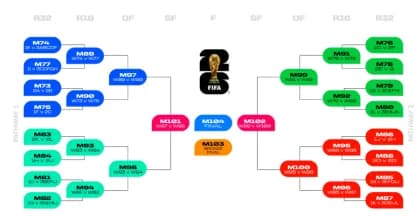
The World Cup 2026 Round of 32 sees 32 teams progress from the group stage to a brand-new knockout stage. The top two teams from each group advance as well as eight of the best third-place teams.
A total of 16 single-elimination games are played between June 28 and July 3, with the winners moving on to the Round of 16 (July 4 to 7). If both teams draw after 90 minutes, 30 minutes of extra time is allotted, and if they’re tied after that, the game proceeds to a penalty shootout.
Fans will enjoy the extra betting opportunities in the Round of 32. Knockout rounds are susceptible to upsets, so anyone looking for underdog value will appreciate this round of betting, especially with the third-placed teams eking their way in. Researching squad depth will help get you an edge in these markets. Beginners can get a primer with our guide on the Best Soccer Betting Markets for Beginners.
What Happens After the Round of 32?
Teams who win in the Round of 32 qualify for the Round of 16, taking place July 4 to 7; this single-elimination stage features eight games with the winner moving on to the quarter-finals and the losing team getting eliminated. No special qualification rules for third-place teams are included in the Round of 16. For a full breakdown of all 104 fixtures and key dates, see our FIFA World Cup 2026 schedule guide for bettors.”
The quarter-finals take place between July 9 and 11 and feature four single-elimination games. The winners move on to the semi-finals, which will be two games, scheduled for July 14 and 15. The final is set for July 19 at MetLife Stadium in East Rutherford, New Jersey and will see the biggest line movements in the tournament.
If you want to bet on the big markets, like outright winner, put your money down early for maximum betting value, especially with the favourites.
How is the 2026 Format Different from Previous World Cups?
The FIFA World Cup 2026 format has more teams and more fixtures, on top of the inaugural Round of 32 knockout stage. From 1998 to 2022, FIFA World Cup saw 32 teams compete in eight groups, and the Round of 16 was added as the first knockout stage.
With the jump to 48 teams in 12 groups and the Round of 32 to kick-start the knockout stage, we get to see 104 matches — a big jump from 64 previously. That stretches the FIFA World Cup schedule from a 32-day tournament to a 39-day one.
A longer tournament means more betting opportunities for avid and casual fans alike. The play-in opportunities with the new third-place rules also create another layer of value betting for underdogs looking to make a statement. To make sure you’ve got the best FIFA betting approach, read our How to Bet on FIFA World Cup from Canada guide.
Teams that are eliminated in the initial group stage play three matches, while teams that make it all the way to the final play eight in total, which is one more than in previous tournaments.
Yes, some rules have changed to allow the eight best third-place teams in the group stage qualify for the Round of 32.
If a Round of 32 game ends in a draw, the game goes to extra time, which is two 15-minute halves. If no one score in extra time, the game goes to a penalty shootout to determine the winner.
Underdog fans will be pleased to know that the format change will support more upsets. The extra knockout round and the inclusion of third-ranked teams means more chances for surprise performances, particularly in the Round of 32.