
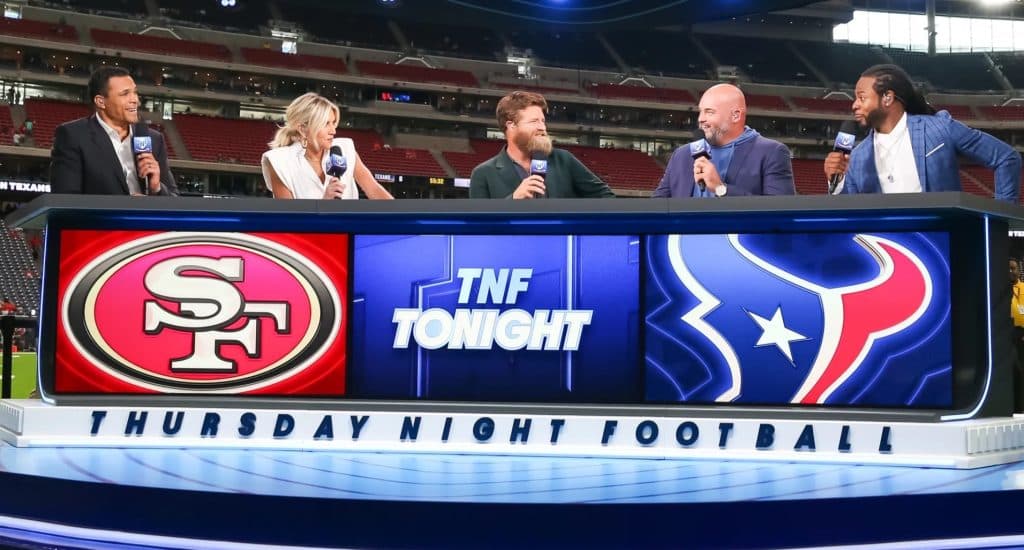
Thursday Night Football has become a regular part of the NFL experience. Every week, fans get an extra game to watch, and the league gets another opportunity to bring in viewers and advertising revenue. Sounds like a win-win, right?
Not always. Over the years, Thursday Night Football has developed a reputation for uneven matchups, sloppy performances, and games that leave fans wondering why they bothered staying up to watch. Add in concerns about player fatigue and the short turnaround between games, and it’s fair to ask: Is Thursday Night Football actually bad for the NFL?
Why Thursday Night Football Gets So Much Criticism
Ask NFL fans about Thursday Night Football, and you’ll probably hear a few familiar complaints. The matchups can feel one-sided, the offence can look out of sync, and some games just aren’t that entertaining.
Part of the problem is that not every matchup is created equal. When a struggling team faces a Super Bowl contender, the result can be a lopsided game that loses its appeal long before the fourth quarter. Of course, blowouts happen on Sundays, too, but Thursday games seem to attract extra criticism when they fail to deliver.
There’s also the quality of play itself. Fans sometimes point to missed throws, dropped passes, and questionable decisions on both sides of the ball. These issues aren’t exclusive to Thursday nights, but they can reinforce the idea that teams simply aren’t playing their best football.
How Short Weeks Affect NFL Players and Performance
One of the biggest challenges with Thursday Night Football is the limited time teams have between games. After playing on Sunday, teams typically have just a few days to recover, review film, prepare a game plan, and get ready for another opponent. That’s a much tighter turnaround than a normal week, when players and coaches have more time to work through the details.
For players, recovery is a major concern. NFL games are physically demanding, and the effects don’t disappear overnight. Players dealing with minor injuries may have less time to recover, while coaches have fewer opportunities to get injured players back on the field.
The short week can also affect preparation. Coaches may need to simplify their game plans because there’s less time to install new plays or make adjustments. That can make it harder to exploit an opponent’s weaknesses or prepare for an unfamiliar defensive scheme.
The result? Some teams may look less sharp than usual, particularly on offence, where timing and coordination are essential.
That doesn’t mean every Thursday game will be sloppy or that playing on a short week automatically leads to more injuries. But the compressed schedule creates challenges that teams don’t face to the same extent during a typical Sunday-to-Sunday stretch.
Why the NFL Keeps Thursday Night Football
If Thursday Night Football creates so many problems, why doesn’t the NFL get rid of it? The short answer is money.
An additional weekly game gives the league more broadcast inventory to sell to media partners. It also creates another opportunity to attract viewers, sell advertising, and reach fans who might not otherwise tune in during the week.
Thursday Night Football has become particularly important in the streaming era. Amazon Prime Video holds the exclusive national streaming rights to TNF in the US, giving the platform a regular reason to attract viewers and subscribers. For the NFL, these media deals represent billions in additional revenue.
Of course, the commercial appeal doesn’t automatically translate into great football. The NFL has strong financial incentives to keep Thursday games on the schedule, even when the quality of play falls short of expectations.
From a business perspective, TNF makes plenty of sense. Whether it makes sense for the players and fans is a different question.
Can the NFL Improve Thursday Night Football?
The NFL probably isn’t going to give up a valuable weekly broadcast slot anytime soon. But keeping Thursday Night Football doesn’t mean the league has to accept the problems that come with it. There are still ways the NFL could improve the experience.
Better scheduling is one option. Teams coming off a bye week have more time to recover and prepare, although a bye alone doesn’t guarantee a better performance. The league could also pay closer attention to rest disadvantages when building the schedule, particularly when teams have to travel or deal with significant injury concerns.
Matchup selection matters, too. While the NFL can’t predict which teams will be good months in advance, it can consider competitive balance when deciding which games receive the Thursday night spotlight.
None of these changes would eliminate every problem. The league has 32 teams to schedule across an 18-week regular season, and moving games around creates logistical challenges of its own. But even a few small improvements could help make Thursday Night Football more competitive.
The Future of Thursday Night Football
Thursday Night Football isn’t necessarily bad for the NFL, but it isn’t without its problems. The extra games bring in viewers and revenue, while the short turnaround creates legitimate challenges for players and coaches.
Ultimately, the issue isn’t that football is played on a Thursday. It’s whether the league can deliver a quality product without putting unnecessary pressure on the people who play it. If better scheduling and smarter matchups can help, the NFL has good reason to explore them. After all, more football is only a good thing when it’s worth watching.
One thing is for certain, is that Ozoon’s NFL Pick’em League is good for football. With a share of $2,000 up for grabs every week, what’s stopping you from signing up? It’s free to play too, so we’ll see you over there.